

The Quest to Lead NJ: Jack Ciattarelli & Mikie Sherrill
By Anthony Birritteri, Editor-in-Chief On Oct 3, 2025Next month, a new New Jersey governor will be elected with the promise of making the state more affordable for residents and businesses. Republican candidate Jack Ciattarelli and Democratic candidate Mikie Sherrill have crisscrossed the state this past year revealing their respective plans for reducing business and property taxes, cutting red tape while improving government efficiencies, stabilizing rising energy costs while increasing in-state power generation, reducing healthcare costs, supporting small businesses, and maintaining a skilled workforce, to name a few of their respective goals and visions.
New Jersey Business Magazine had the opportunity to interview both candidates, asking them business questions to shine a spotlight on how they would govern the state over the next four years. What follows is an edited transcript of their respective interviews.
These gubernatorial Q&As are a long-running tradition at New Jersey Business Magazine. We undertake this effort during every gubernatorial election cycle so that when our business readers go to the polls, they will make an informed and educated decision when choosing the person, they believe, will best serve the state as it strives to compete regionally, nationally and globally.
Q&A with Ciattarelli
New Jersey is a high tax state. What are your plans to lower the tax burden on businesses?
One of my primary tasks is to reduce the size and cost of state government. It’s bloated and inefficient. In doing that, [we can] afford tax cuts for individuals. I also want to do what the Democratic governor of Pennsylvania is doing in lowering its state business tax 1% a year over a five-year period. [Our state’s corporation business tax] increased to 11.5% as of July 1 of last year. We need to reduce that to make New Jersey regionally competitive.
You will see a reduction in size and cost of government in my first budget. … Right now, we have a Committee for State Investigations, whose job is to identify fraud in state government. We also have a State Comptroller, who identifies waste and inefficiency. I see an overlap between the two agencies. I want to put them together underneath one Auditor General, whose job will be to identify waste, inefficiency, and fraud throughout state government. Call it what we may, but that’s the equivalent of a DOGE for New Jersey.
What are your plans for lowering property taxes? Will it include revising the school funding formula?
Our property taxes are the highest in the nation, not necessarily because of municipal and county budgets, upon which [a governor has] no real power. Where I could have real influence is the school tax, and that’s because of state aid. So, we need a new school funding formula. The current one is nefarious. It’s arbitrary and violates the equal benefit clause of our state constitution that says no community is supposed to suffer at the expense of another. So, with a more equitable distribution of state aid, we can lower property taxes. The cost per pupil in a place like Newark is $37,000, while the state average is $16,000. No one can justify to me that a particular student needs $21,000 more per year to educate them. That makes a compelling case why the current formula is unfair. Does that mean I will leave a community or student behind if that school district isn’t performing well? No. I believe in a voucher system, like we’ve seen in Arizona, Ohio, and Florida. I also believe in school choice, and charter schools to achieve that objective.
Also, I’ve learned that consolidation has to happen, but I’m not going to strong-arm school districts to regionalize or consolidate. One thing I will do is incentivize the hell out of it.
For first-time homebuyers, I want to cap property taxes at 1% of assessed home values for the first five years of home ownership. For our seniors, I want to freeze property taxes for life once they hit 70. I think these are fiscally responsible and doable.
What are your plans for maintaining a sustainable budget?
Phil Murphy’s fourth budget was $48 billion, and it made the first full payment into the state’s pension system. Guess what? That’s $11 billion less than the current budget is. I’m going to pull out Phil Murphy’s fourth year budget and put it side by side with the current budget to see where we can save money. But it all comes down to priorities. Every administration is going to have a different priority. One of mine will be to revitalize our urban centers. Our suburbs are beautiful, but they’re not the engines of economic growth. I’ve got an aggressive plan to foster economic development and make places like Newark, Trenton, and Atlantic City places where people want to live again.
We’re going to have redevelopment zones that will incentivize developers to do business in [these] communities. I’m a big fan of dynamic mixed-use. I want to see commercial buildings, but I also want to see low-, moderate-, and market-rate [housing] units.
What are your plans for cutting red tape and reforming labor and environmental mandates that hinder businesses?
We need a pro-business governor, a pro-business administration, and pro-business policies. One of those policies is to eliminate all the red tape that we see here in the state. Here’s what I would ask every industry in every space: come to me with three to five reforms specific to your industry. As long as they don’t negatively impact consumers or taxpayers or do irreparable harm to the environment, consider me all in. Also, on Day One of my administration, you will have a Department of Commerce. We will partition it along the lines of North, Central, South and the Jersey Shore. We will also partition things among small-, medium- and large-sized businesses, because each one of them has its own challenges.
Also, if you are a large-scale project that’s trying to be developed, and you have to deal with more than two state agencies, there will be a point person in the Department of Commerce who will shepherd your company through the processes.
With energy costs skyrocketing, what are your plans on making power more affordable for businesses and homeowners?
Today, companies look at four things: taxes, regulations, labor pool, and now energy. And we’re in trouble in New Jersey [regarding energy]. On Day One, I will put a shovel in the ground for a fourth nuclear reactor in South Jersey. The three nuclear reactors we currently have provide 40% of our electricity with zero carbon emissions. Additionally, the footprints for five other reactors have already been approved by FERC. I can have a nuclear reactor up and running in six to seven years.
We will lift the unofficial moratorium on natural gas fired electric generation plants. I’ll put shovels in the ground for three or four more. There are also things we can do to accelerate the development of more solar arrays. And we’re not going to be relying on wind, which was never going to be able to satisfy our energy needs to begin with, not to mention it is an expensive type of electricity to produce. I’m okay with an “all of the above” approach, but wind, in my mind, is in fourth place [as a solution].
We will also not have energy policy coming out of the NJBPU or the NJDEP. We will set the regulations, while [those agencies] will enforce them. I’m going to reestablish the Department of Energy that we had under Gov. Tom Kean. I just need one or two dozen energy experts who will work in partnership with the executive branch to put forth the right energy policy for New Jersey.
We also need a rational transition to the future. I think in 10 years, we’ll be having a much larger conversation about things like carbon capture, fusion energy, micro-modular nuclear, and hydrogen cell battery technology.
With many industries in need of skilled workers, what are your plans to improve workforce development initiatives in the state?
My Department of Education will implement the European model, where we sit down with eighth graders at the end of the school year and talk with them and their families as to what their plans are. If they don’t want to go to college, they will be on a vocational track all through their high school years. [In the same way] we can produce the trades people that we need. We need a more robust relationship between the Department of Labor and the Department of Education. Labor should be telling education where the labor shortages are, and then we should be doing everything we can with our educational systems to point people toward those careers.
I still find our community colleges are too much of a well-kept secret. We need to do a better job at promoting our workforce development programs. And I don’t think those programs should necessarily just be community college based. That’s [also] the role that technical institutes can play.
New Jersey ranks as the fourth most expensive state for post-secondary education. How will your administration make that education more affordable and accessible?
I’m going to have a candid discussion with our public college and university presidents [concerning] getting their cost structures under control. Also, our colleges and universities may need to stop trying to be all things to all students; that can help lower the cost of overall operations. And of course, we want to provide as much money as we can to lessen that burden to students, and we do that through state funding.
I’m very keen on the Missouri program, where if someone has three years of W2 earnings from a Missouri employer after their
graduation, they will refund you the difference between your in-state and out-of-state tuition. That’s a strong incentive. It’s fiscally responsible and compelling. They’re trying to get young people to take root in Missouri. We need to look at the same thing right here.
What are your plans to reduce healthcare costs for employers, employees, and their families?
We hear across the board that insurance costs are increasing no matter what kind of insurance it is. It’s putting a real burden on individuals and businesses. We hear all the time that we can use more competition in the state – that there’s only three or four predominant [insurance] players. If we could attract more, then we could do a better job of lowering health insurance rates.
For people who buy healthcare individually, is we can allow them to deduct 100% of their health insurance premium on their state tax return.
I’ve also got to sit down with the big players. Hospital systems are getting bigger. They deliver quality care, but we’re not seeing the cost decreases that we heard consolidation would help produce. Let’s sit down with our healthcare providers and find out what we need to do to create a partnership to make [cost reductions] happen.
How will the One Big Beautiful Bill Act impact NJ?
This bill quadruples the SALT deduction. That’s important to [New Jersey residents] who pay the highest property taxes in nation. It doubles the childcare tax credit, it doesn’t tax tips, overtime, or Social Security. I’ve always said that Social Security should not be taxed ever, under any circumstances. I also want to make all retirement income in New Jersey tax free, just like Pennsylvania.
People on Medicaid have to prove their eligibility twice a year. That’s reasonable. In fact, it was President Obama who put that policy in place. President Trump kept it. President Biden moved it to once a year. I have no problem with able-bodied people putting in 20 hours a week of work or volunteering to continue to qualify for Medicaid.
The rhetoric I’m hearing from the left on the issue reminds me of when President Clinton turned welfare into workfare. We were told people would die in the streets. I don’t think that’s going to be the case [here]. But if there are people who [are seriously impacted] because of the cuts in the federal portion of Medicaid, we’re going to take care of the vulnerable under my administration. I will make up the difference. However, I don’t think that’s going to be the case. As governor, I will try to instigate a conversation with the National Governors Association that it’s time for a national discussion on the Feds picking up 100% of the cost of Medicaid, just as it does with Medicare. I don’t think taking care of the poor is a state-by-state issue. It’s a national issue.
The Trump administration’s tariff policies are a moving target. How will your administration address the potential impacts of tariff increases?
The thing that hurts New Jersey’s economy the worst are the current policies we have in place. I’m talking about taxation on business, regulations, labor pool shortages, and energy … and I can control all four of those things. The president has forewarned us there’s going to be some short-term pain for long-term gain [regarding tariffs]. We need to hit the reset button on the trade deficit, and that’s what President Trump is trying to do with tariff negotiations. I’m confident in the end that it is going to work out well for everybody, and I don’t think the end is that far away.
The NJDOL has proposed significant changes to the current ABC test that would drastically reduce the number of independent contractors in the state. Where do you stand on the issue?
I’m a free market guy, and I think that our state economy is best served when there’s balance. What I mean by that is 1099, and W2, union and non-union jobs.
I do not support [the proposed NJDOL rule]. It would be dead on arrival under Governor Ciattarelli. My medical publishing company would never have survived if I wasn’t able to use independently contracted scientific writers to produce content for continuing medical education that it provided to physicians. That’s just one space under the umbrella of independent contractors. … I do not support the movement.
Biography
Republican gubernatorial candidate Jack Ciattarelli says New Jersey needs a pro-business governor and pro-business policies. He says he will deliver both if elected.
His plans include lowering the Corporation Business Tax rate by 1% each year, over five years, eliminating red tape and cutting fraud and waste in state government, making the school funding formula more equitable for all residents, and bringing more in-state energy production online.
This tenacious candidate has kept his eye on the gubernatorial prize for quite some time; this is his third gubernatorial campaign. His drive stems from a work ethic learned from his parents: “Who they are is what I am,” he says.
Giacchino (Jack) Michael Ciattarelli, the grandson of Italian immigrants, was born in Somerville on December 12, 1961. Excelling in mathematics in high school, he enrolled in Seton Hall University where he would receive a Bachelor of Science in Accounting (he later passed the CPA exam). He would also receive an MBA in Finance from Seton Hall University.
Ciattarelli went to work for a medical publisher. With this experience, he started American Medical Publishing in 1994. Four years later, he sold the company, and by 2000, started Galen Publishing, which he sold in 2017.
He entered politics in the late 1980s when he ran for Raritan Borough Council. Losing by 12 votes, he ran the next year and won, taking office in 1990 and serving for three terms. He also served as council president.
In 2006, Ciattarelli was elected to the Somerset County Board of Chosen Freeholders, serving from 2007 to 2011. He resigned from this post to run for State Assembly for the 16th Legislative District. He won the seat and was sworn in on January 10, 2012.
In 2017, he ran for governor for the first time, but lost the Republican primary to Lt. Gov. Kim Guadagno. With his eye still on the prize, he was back seeking the governor’s seat during the 2021 election cycle. Then, he won the Republican primary with 49.5% of the vote.
By October of that year, incumbent Democratic Gov. Phil Murphy was leading in the polls, but what occurred on election night did not reflect these findings. Murphy won by a margin of less than 3%.
In this year’s primary, Ciattarelli – who received the endorsement of President Donald Trump – faced a crowded field. However, he garnered 67.8% of the vote to win.
“Today, [problems] are at a complete boil. However, I’m excited. I see this as a reset button [for the state].” – Ciattarelli
Q&A with Sherrill
New Jersey is a high tax state. What are your plans to lower the tax burden on businesses?
Taxes are too high. This has been something that throughout my time in Congress, I’ve been working to address, and I will be incredibly focused on this as governor. We have to stop raising taxes with every move we make. Regarding the Corporate Transit Fee, we need a long-term plan for transit … a dedicated source of funding. When I am governor [that] will be transit-oriented development, and making sure that’s feeding into [transit funding]. Then we can get rid of the Corporate Transit Fee, which is making our corporate taxes the highest in the nation.We’ll put the plans in place for this development right away.
[We should also] hold the federal government accountable as we try to claw back money. As governor, I’m going to make sure that I’m better utilizing our federal delegation. We could work better as a team. [This should be] directed by the governor. I will make sure that we are acting in concert to bring money back.
What are your plans for lowering property taxes? Will it include revising the school funding formula?
The only way we’re going to drive down property taxes is by incentivizing shared services. Governors have been saying this for a long time, but we’re coming to a breaking point. We’re seeing school systems running full administrative services and facilities, but having very few students … and we’re set to see a further decline in students [in the state]. That has to be addressed now. We can also open some of the county-based school systems, which are some of our best performing schools, [to] address the needs of our workforce with some of our occupational [vocational & technical] schools and STEM schools. That would be a much better use of taxpayer dollars, while ensuring that our students continue to get a great education.
I also want to make sure that we modernize and stabilize the school funding formula, because now, in too many cases, we’re seeing school districts getting these 11th hour [funding] challenges and having huge disruptions at the beginning of the school year.
What are your plans for maintaining a sustainable budget?
We have to drive down costs by making sure we’re addressing the ways in which the state isn’t functioning well. One of the things I always hear from companies is that taxes are too high. But I also hear about permitting and regulation issues related to small businesses. I was just speaking to a woman who was opening a restaurant. It took her six-to-eight months to get through the permitting process. While she was doing that, she was paying rent and paying contractors. Every time her permit failed, she had to pay another couple of hundred dollars [to reapply].
We have this culture right now of too many ways of getting to “No,” and that’s costing people a lot of money. We need to get to a culture of “Yes.” On Day One, I’m going to drive [that] as governor. I’m going to drive the “Save You Time and Money” agenda, which starts with customer service getting to a yes-oriented culture. I’m going to cut business processing fees. I’m going to cut permitting time and cut regulations back. I’m going to hold people in Trenton accountable. I also want to make sure the public can hold me accountable by being transparent about how we are driving down costs.
We’ll have a dashboard where a business can see where it is in the permitting process; making sure there are deadlines in that process. I will be able to see if there’s a problem in the process, and say, “Why is this taking so long? What is going on? We will make sure that we’re moving things through and helping businesses grow here in the state again.
What are your plans for reforming labor and environmental mandates that hinder businesses?
I’m going to make the Business Action Center more muscular. If you have questions, there should be somebody you can call and get an answer. You’re not going to keep calling helplines that go unanswered.
Business is also going to have a seat at the cabinet table. I am going to be overseeing the cabinet, so the buck is going to stop here. I was part of an accountable environment [in the Navy], so I am also very comfortable with being held accountable. That’s why I’m going to [create] metrics. With a Business Action Center dashboard, I’m going to be able to say for example, ‘Look, this department, instead of taking three days, it is taking one month.’ That’s unacceptable.
With energy costs skyrocketing, what are your plans on making power more affordable for businesses and homeowners?
On Day One, I’m going to declare an energy/utility cost crisis, because what is going on is unacceptable (a few days after this interview, Sherrill said she will use her executive authority immediately as governor to freeze utility rates). A key difference between me and my opponent is that he supports the One Big Beautiful Bill Act (OBBBA), which is going to raise utility costs by hundreds of dollars. It’s also going to impact our ability to push power into the grid.
I was talking to some solar producers who were not sure if they were going to get their projects online as quickly, because the OBBBA is cutting back on the Inflation Reduction Act [and its renewable energy incentives]. As governor, I’m going to make sure we are using an approach to get both solar power and better battery-stored power into the grid. That latter will allow us to buy power cheaper, because we can store and buy it at night. We will also modernize our natural gas facilities, bringing on more capacity, and have a plan for nuclear. Lowering costs and decreasing carbon emissions is something I’m going to do as governor, and I’m going to hold PJM accountable.
My goal is to increase power production, decrease utility costs, and decrease carbon emissions. If we have the opportunity to do wind at an effective cost for people, that’s interesting to me. I am – to some extent – agnostic about how we do it, as long as we are meeting those goals.
With many industries in need of skilled workers, what are your plans to improve workforce development initiatives in the state?
I’ve always had an eye on how we are going to address workforce needs, because that is one of the key things I hear throughout my district. For years now, I’ve driven workforce development initiatives, supporting things like the Helmets to Hardhats program and a lot of apprenticeship programs. [My support] helped make federal investments in our community colleges, given the workforce training that they provide. I’ve also driven support for Picatinny Arsenal with programs at Stevens Institute and NJIT.
Sometimes, when you get out of the military, your credentials are not well understood. If you want to go into the civilian workforce, you don’t have civilian accreditation. So, I’m working to address those types of things, making sure that, for example, as we try to get nurses into our state, they are not prohibited from coming here because their accreditations in other states aren’t portable. Portable degrees, as we’re trying to grow our workforce, are important.
New Jersey ranks as the fourth most expensive state for post-secondary education. How will your administration make that education more affordable and accessible?
We need to make sure our kids have affordable pathways to our wonderful institutions. We see federal funding cuts to Pell Grants. The OBBBA is a huge hit to New Jersey, a state that pays $70 billion more in federal taxes than we get back, and now we’re seeing more cuts. It’s a $5 billion hit to our state budget. So, it’s looking at ways in which we can have stackable credits, in which we can have some of our school systems feeding people right into the workforce.
Our colleges and universities used to work together better to determine some regionalization, so that they weren’t competing. Right now, there’s a real competition going on for every student. As I speak to the presidents of colleges and universities, they want to come together with a better statewide strategy. We need to make [institutions] work together to keep our students here and have our colleges and universities agree on how we are training children, and who’s going to be in the school that does X, Y and Z, so that it’s more of a synergy instead of a competition. We can work to keep kids here and make better financial decisions and drive down the costs for colleges and universities.
What are your plans to reduce healthcare costs for employers, employees and their families?
Healthcare costs have continued to rise, while the experience of the patient has continued to decline. We need to get an independent auditor [to look into] the state health benefits plan. It has to be better run. It’s driving up property taxes. It’s driving up costs for individuals. We need to make sure that we are getting the money back to the state as insurance claims are filed; there are hundreds of millions of dollars that I don’t think are correctly coming back to New Jersey. We have to take on the PBMs (pharmacy benefit managers) – the middlemen who are driving up costs 10 times or more. But they’re doing something even worse. They’re driving small and independent pharmacies out of business, while continuing to increase costs. Also, if you have a medicine that they’re not making money on, they’ll say they’re out of it, so they don’t have to fill the prescription.
I supported legislation at the federal level [to address the issue], but it did not get across the finish line. It’s on the states now to take this on, and I will do that as governor.
How will the One Big Beautiful Bill Act impact NJ?
The bill is going to create a $5 billion hole in our budget. About 400,000 people in the state are going to lose their health insurance. We’re going to go back to the days of people going to the emergency room for care, which is the most expensive kind of care. Not only is it expensive, but your healthcare outcomes [will be] much worse. And when you drill down on some of these Medicaid cuts, it’s not just cutting healthcare, it’s actually adding costs to the administrative red tape and bureaucracy of the system, because now they’re doubling the amount of regulations [meaning more] requirements to turn in paperwork.
We are seeing hospitals that are threatened. Some hospitals in the south, without more support, may close because of this. We’re seeing just horrible cuts across the board from this piece of legislation.
I’ve already been talking to hospital systems about how to get care – at a very basic level – to children. They have some thoughtful ideas on how we’re going to do that, but when you’re a state that gives $70 billion more to the federal government than you get back, and now the federal government is going to cost you $5 billion more, it starts to become very difficult. That’s why I’m going to do everything I can to claw back that federal funding and to push back against what’s coming from Washington.
The Trump administration’s tariff policies are a moving target. How will your administration address the potential impacts of tariff increases?
The tariffs have been horrible. I have been hearing about this since day one. Not only is [the president] creating this tariff regime, but we’re seeing reverse tariffs from Canada, and they’re not buying American. We’re trying to do things like reshoring American manufacturing, [but tariffs are] making it hard for us to keep our companies open.
This is the reason why we’re seeing job losses. It’s stopping people from wanting to expand their businesses because things are difficult to navigate. Furthermore, a lot of our businesses have been eating the tariff increases so that they can continue to maintain their customer base, thinking this will all work itself out. However, there’s a real fear that as we get to the holiday season, this is all going to fall like a house of cards.
The NJDOL has proposed significant changes to the current ABC test that would drastically reduce the number of independent contractors in the state. Where do you stand on the issue?
Businesses are worried that they are going to go under because of this. I’ve heard from truckers who are saying, “I’m afraid I’m going to lose my job.” That’s not what we want to see under this proposal. I’m going to review this when I get into office and have both businesses and workers at the table as we make sure regulations can help grow business and keep people employed.
Biography
Steeped in accountability and service due to her experience in the U.S. Navy, Congresswoman Mikie Sherrill says that being responsible for keeping the public trust is like being accountable for lives in the military. “People depend on [you], the same way as when you’re flying a helicopter,” she says. “If you can’t deliver, then businesses don’t thrive, jobs are lost, and young people move away because they don’t have opportunities.”
Among her many initiatives if elected governor, Sherrill wants to change the culture in Trenton from one that says “No” to businesses to one that says “Yes.”
She hopes to achieve this with her “Save You Time and Money Agenda” that she says will make state government work better, with fewer delays and costs for residents and businesses.
Sherrill’s life has been one of action. Born on January 19, 1972, in Alexandia, Virginia, as Rebecca Michelle Sherrill, she was inspired to join the military by her grandfather, who was a World War II veteran. She entered the Naval Academy in Annapolis, Md. in 1990. Four years later, she became a Navy helicopter pilot, flying an H3 Sea King on support missions out of Bahrain for the US fleet. She spent a full 10 years on active duty.
Following her service, Sherrill obtained a Master of Science degree in economic history from the London School of Economics in 2003, and a Juris Doctor from Georgetown University Law Center in 2007. From 2008 to 2011, she was an associate at the law firm of Kirkland & Ellis in New York City. From 2012 to 2015, she worked as an outreach coordinator at the U.S. Attorney’s office for the District of New Jersey. From 2015 to 2016, she was an assistant U.S. Attorney for the same district, where she prosecuted federal cases.
Sherrill felt she had a role to play in changing Washington, D.C. On May 17, 2017, she announced her candidacy to run for Congress and pursue the 11th district seat that was held by Republican Rodney Frelinghuysen for 12 terms. In January 2018, Frelinghuysen announced he would not run for re-election. Sherrill won the Democratic nomination with 77% of the vote. In the general election against Republican Jay Webber. Sherrill would win reelection in 2020, 2022 and 2024.
Shortly after her 2024 Congressional win, Sherrill announced she would run for New Jersey governor. She faced five other challengers in the primary, including Newark Mayor Ras Baraka, Jersey City Mayor Steven Fulop, and former New Jersey Senate President Steve Sweeney. She won the primary, garnering 286,244 votes (34%) compared to her closest rival, Ras Baraka, with 173,951 votes (20.7%).
“If you can’t deliver, then businesses don’t thrive, jobs are lost, and young people move away because they don’t have opportunities,” -Sherrill
To access more business news, visit NJB News Now.
Related Articles: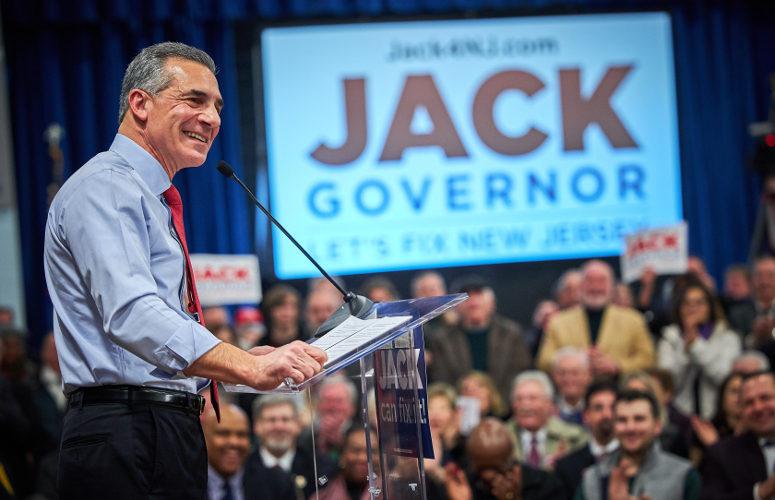

- Accounting
- Artificial Intelligence
- Banking / Financial
- Coronavirus
- Diversity
- Economic Development
- Economy
- Energy
- Environment
- General Business
- Government
- Healthcare
- High-Tech
- Higher Ed
- Infrastructure
- Labor
- Law
- Life Sciences
- Manufacturing
- Meeting Places
- Mergers & Acquisitions
- New Hire/Promotion
- Philanthropy
- Real Estate
- Science & Technology
- Small Business
- Tourism
- Transportation
- Workforce Development
- Special Sections
- Sponsored Content
