



NJ’s Business Incubator Boom
High-tech business incubators are growing throughout New Jersey in tandem with an increased appreciation for the key economic roles they play.
By George N. Saliba, Contributing Writer On Feb 5, 2025Ten years ago, when NJIT’s New Jersey Innovation Institute (NJII) President Michael Johnson, PhD, was searching for real estate space for his startup company, he couldn’t locate a 10,000-square-foot laboratory in the state: “[Available space] just didn’t exist, and that was a huge problem. There were [real estate] spaces that were a million square feet, but there wasn’t something for a startup company per se…”
The scenario has since changed due to philosophical shifts at government, corporate and university levels. In an ongoing trend, startup incubators have been flourishing both throughout New Jersey and the nation as they provide appropriately sized real estate and offer multiple tenants access to high-tech equipment as well as community-building with other entrepreneurs/startups. Enhanced access to capital is often another benefit.
The incubator movement acknowledges that these facilities contribute to local economies via both innovation and fostering job growth, with incubators’ projected global annual growth rate set at 8.14%. Incubators’ importance cannot be overstated: The International Business Innovation Association (INBIA) notes that over a five-year period, the survival rate for startups in business incubators is 87%, compared to just 44% for go-it-alone startups.
NJIT
As an overall case in point, NJII’s Johnson says the key benefits of its 110,000 square feet of incubator space across two buildings include access to NJIT’s high-performance computing cluster that AI startups can leverage, in addition to a campus “makerspace” for prototyping medical devices. An advanced manufacturing space for military applications is also part of the equation, while a 5,000-square-foot, off-site incubator is dedicated to defense manufacturing where firms can interact with the U.S. Department of Defense via Pitcatinny Arsenal.
Johnson says overall, “In a typical incubator, you’ll have access to a shared microscope or NMR (nuclear magnetic resonance machine) or [other] equipment. We certainly have that, but it’s really the access to the larger academic environment that is critical for us.”
He underscores, “[Our incubator] is directly on [NJIT’s] campus, the state’s polytechnic university,” adding that startups can avail themselves of experts in various research fields such as AI and engineering as well as have access to undergraduate and graduate students who can help on a part-time or full-time basis. There are also mentoring groups and networking. NJIT’s geographic location is additionally key, offering rapid access to New York City, and – from there – the entire eastern seaboard.
Princeton University
Location is also critical for Princeton University’s incubator – Princeton Innovation Center BioLabs – situated in the heart of New Jersey’s biopharmaceutical landscape. Craig Arnold, PhD, vice dean for innovation and university innovation officer, as well as the Susan Dod Brown Professor of Mechanical and Aerospace Engineering at Princeton University, tells New Jersey Business Magazine, “Some people might go on TV to talk about their ideas; some people might write books. But for [certain] things, the appropriate way to get it to the world is to commercialize the ideas. It doesn’t mean that a faculty member must do it. It could mean that you license an idea to a company, or – if somebody [possesses] that interest and skill set – it might be appropriate for them to participate. [So, incubators help] a university like Princeton … fulfill our mission of benefitting the world.”
Princeton Innovation Center BioLabs not only features access to lab equipment such as qPCR, flow cytometer, freezers, fume hoods, plate readers, centrifuges, microscopes and balances, but it additionally includes environmental health and safety support as well as connections to capital in both “formal and informal settings.” While startups do not need to originate from Princeton University, the incubator has, in fact, been home to several Princeton-based spinouts, particularly from faculty members who are developing patents or technologies.
NJEDA
State government is another player in the incubator realm. Against the backdrop of the New Jersey Bioscience Center at North Brunswick celebrating its 25th year anniversary, the New Jersey Economic Development Authority’s (NJEDA’s) Chief Economic Transformation Officer Kathleen Coviello recalls that the center was opened in response to companies stating that they couldn’t locate affordable laboratory space. Since life sciences companies’ clinical trials can either succeed or fail terribly, Coviello says that with that in mind, the NJEDA has supported an array of companies. Success stories include GENEWIZ and Amicus Therapeutics.
“These are companies that have gone on to raise significant amounts of dollars and are public companies employing 800-plus [people] in the state,” Coviello says. “That’s ultimately the end goal, but I think sometimes the nurturing that comes about at these centers is just as important. We have a dedicated manager [at the center], and a staff who works full time with these companies and helps connect [them] into the marketplace and into other resources in the state – and with others in the facility.”
NJ Accelerate
The NJEDA’s NJ Accelerate program is also part of the equation, as it helps fund private-sector accelerators/incubators, including but not limited to the hard-technology accelerator HAX, in Newark, operated by SOSV, the latter one of the most active venture capital firms in the world. NJEDA’s NJ Accelerate also directly funds companies.
The NJEDA is additionally facilitating strategic innovation centers throughout the state, with different areas of focus, including, for example, the NJ AI Hub at Princeton University and NJ FAST, a fintech accelerator at Stevens Institute of Technology. The NJEDA is also playing a role in the construction of The HELIX NJ in New Brunswick, a site that will ultimately be comprised of three buildings providing “1.5 million square feet of multifaceted, state-of-the-art environments supporting the gamut of health and life science organizations and professions.”
Edge Works
A flurry of incubator and accelerator activity throughout the state additionally includes Edge Works, which is slated to be an eight-story business incubation hub at SciTech Scity, the latter a 30-acre “City of Tomorrow” being developed by the Liberty Science Center.
Separately, Comcast NBCUniversal’s LIFT Labs connects startup founders with leaders across its business to develop long-term partnerships. Camden-based Sporttrade – a company in the sports betting arena – participated in the 2019 Accelerator and is among the more than 85 firms LIFT Labs has aided.
Rowan University
Rowan University’s Technology Business Incubator is centered on partnerships, according to Anthony Perno, associate vice president of real estate for Rowan University, and executive director of the South Jersey Technology Park. University assets are partnered with firms such as Lockheed Martin and Thunderbolt Solutions as well as smaller startups like ReGelTec, Inc.
Conclusion
As New Jersey’s incubators are poised for further success. Princeton University’s Arnold concludes, “There is an opportunity for those people who build incubators and run accelerators. New Jersey is a real place for growth right now.”
Key Business Incubators and Accelerators in NJ
- The Bergen Community College Business Accelerator
- The EcoComplex “Clean Energy Innovation Center” (Rutgers University)
- Edge Works (at SciTech Scity at Liberty Science Center) (planned)
- EqualSpace, in Newark
- Enterprise Development Center incubator (at NJIT)
- The Food Innovation Center at Rutgers (FIC)
- HAX, in Newark, operated by SOSV
- Kearny Point
- Kings Ventures
- The HELIX NJ in New Brunswick (planned)
- Makerhoods in Newark
- The New Jersey Aquaculture Innovation Center at Rutgers University (AIC)
- New Jersey Bioscience Center at North Brunswick
- Newark Venture Partners
- NJ Accelerate (New Jersey Economic Development Authority)
- NJ AI Hub at Princeton University (planned)
- NJ FAST (Stevens Institute of Technology)
- NJII Advanced Manufacturing Center
- Princeton Innovation Center BioLabs
- The Profeta Center for Innovation and Entrepreneurship (at NJIT)
- Rowan University’s Rohrer College of Business Incubator
- Rowan University’s Technology Business Incubator
- Step-Out Labs at North Brunswick
- TechLaunch
- Tigerlabs
- Thomas O. Daniel Research Incubator and Collaboration Center (Celgene Corporation campus)
To access more business news, visit NJB News Now.
Related Articles: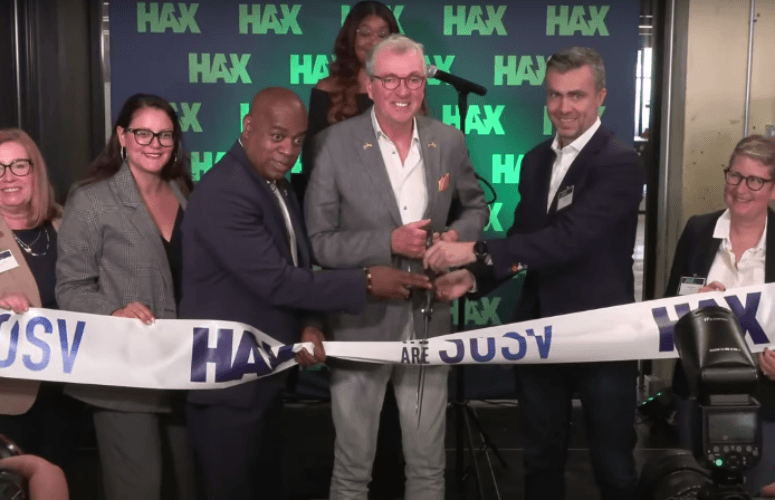

- Accounting
- Artificial Intelligence
- Banking / Financial
- Coronavirus
- Diversity
- Economic Development
- Economy
- Energy
- Environment
- General Business
- Government
- Healthcare
- High-Tech
- Higher Ed
- Infrastructure
- Labor
- Law
- Life Sciences
- Manufacturing
- Meeting Places
- Mergers & Acquisitions
- New Hire/Promotion
- Philanthropy
- Real Estate
- Science & Technology
- Small Business
- Tourism
- Transportation
- Workforce Development
- Special Sections
- Sponsored Content
