


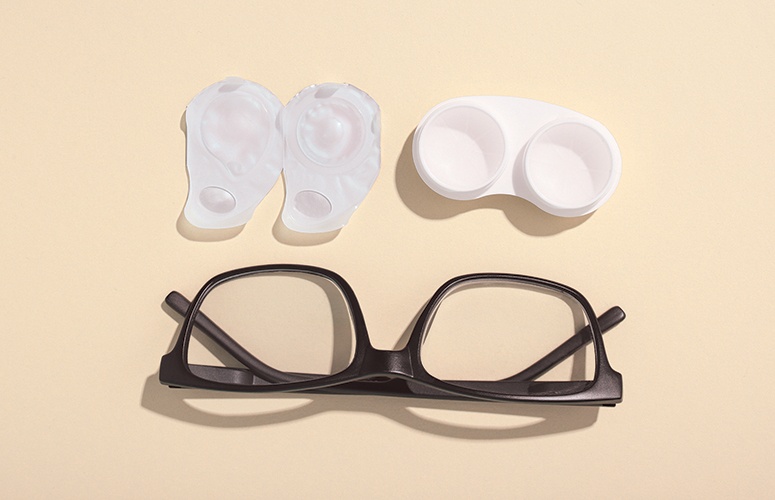
Supporting Employee Eye Health
Healthy Living
By Dr. Greg Carnevale On Oct 10, 2024In an increasingly digital world, supporting eye health at work is a crucial responsibility for employers. Vision may not only impact the overall health of employees and their families, but it may also affect productivity levels and business outcomes.
For example, nearsightedness, also known as myopia, is a condition that hinders the ability to see far-away objects clearly. The condition is on the rise and affects around 42% of Americans nationwide. It’s even projected that 50% of people worldwide will be nearsighted by 2050.
While nearsightedness can be a hereditary condition, increased hours using digital devices at close range have also been linked to an earlier onset of this condition.
With Americans spending an average of seven hours per day interacting with screens, digital device use at work and at home can also lead to a greater exposure to emitted blue light. This light may have potentially harmful health implications for employee health, including causing disrupted sleep cycles and digital eye strain.
With the growth of remote work and digital device use, it’s more important than ever to be aware of the prevalence of nearsightedness and the impact of blue light on eye health. Here are some tips for employers to help employees protect their eyesight at work:
Promote education. Share information about vision wellness and best practices to support eye health at work. Encourage employees to set up their computers and digital devices at least 30 inches from their eyes to help reduce blue light exposure. Also, incorporate the 20-20-20 rule, which recommends that after 20 minutes of computer work, people take 20 seconds to look at something that’s approximately 20 feet away.
Upgrade and up-keep digital devices. Encourage clean computer screens to help improve display readability and reduce eye strain. Also, consider making screen filters available to help employees reduce their blue-light exposure when using computers or smartphones for work.
Encourage eye exams. Encourage employees to visit an eye doctor and get a comprehensive eye exam, especially if they use computers frequently at work or may be experiencing vision issues. These types of exams can detect health problems that a simple vision screening may miss, including conditions not usually associated with the eyes like diabetes and some types of cancer.
Offer vision plan options. By offering vision plans, your employees may be able to get diagnosed sooner and get the treatment needed to support their eyesight. They can also save on glasses with blue light filtering lenses and anti-reflective coating.
About the Author: Dr. Greg Carnevale is chief medical officer for UnitedHealthcare’s commercial business in New Jersey.
To access more business news, visit NJB News Now.
Related Articles:

- Accounting
- Artificial Intelligence
- Banking / Financial
- Coronavirus
- Diversity
- Economic Development
- Economy
- Energy
- Environment
- General Business
- Government
- Healthcare
- High-Tech
- Higher Ed
- Infrastructure
- Labor
- Law
- Life Sciences
- Manufacturing
- Meeting Places
- Mergers & Acquisitions
- New Hire/Promotion
- Philanthropy
- Real Estate
- Science & Technology
- Small Business
- Tourism
- Transportation
- Workforce Development
- Special Sections
- Sponsored Content
