



What’s Driving Today’s Construction Trade?
AN AGING WORKFORCE, EARN-WHILE-YOU-LEARN OFFERINGS WITH GOOD WAGES, AND MORE PROJECTS IN THE PIPELINE MEAN CONSTRUCTION TRADE CAREERS ARE PROMISING.
By Ron Marisco, Contributing Writer On Apr 7, 2026New Jersey’s construction trades continue to see exceptional interest in their apprenticeship programs as they seek a delicate balance to ensure workforce development does not outpace available projects, industry representatives say.
The International Brotherhood of Electrical Workers (IBEW) Local 102, International Union of Operating Engineers (IUOE) Local 825, and Laborers’ International Union of North America (LIUNA) are closing application periods within minutes due to the robust participation in their respective apprenticeship programs.
A combination of factors is driving interest in trade jobs: Being able to earn while you learn, skyrocketing college costs, concerns about Artificial Intelligence (AI) taking white collar jobs, as well as high wages and good benefits offered, say officials within the trades.
“We have no issues recruiting or retaining a skilled, reliable membership,” says Rob Lewandowski, external affairs director for LIUNA / New Jersey Laborers’-Employers’ Cooperation and Education Trust. “Our goal is to always right size the membership to the available work.’’
Greg Lalevee, IUOE 825’s business manager, says his union is “slowly and steadily’’ increasing heavy equipment operator apprenticeships.
“We are your staffing solution,’’ Lalevee likes to tell companies. With an easy solution if construction opportunities expand, “we just bring in more apprentices so you can get staffed.’’
Construction work in New Jersey is steady or better for many workers, particularly in the AI data center, pharmaceutical, college/university, and some localized sectors – like Hudson County’s high-rise developments, say industry officials.
“I would say we’re the strongest we’ve been from a work perspective,’’ explains Bernie Corrigan, president of IBEW 102, citing the past 20-to-25-year period. “And a lot of that has to do with data centers.’’
One of the key projects creating jobs is CoreWeave’s $1.8 billion AI data center in Kenilworth, which will provide up to 250-megawatt capacity.
Essential, however, to attracting data centers and other economic development projects is ensuring New Jersey’s capability to meet the state’s voracious power needs, particularly after closure of outdated power plants over the past decade. Amid skyrocketing energy costs and shortages, Gov. Mikie Sherrill declared an energy emergency upon taking office in January, pledging to quickly break ground on new solar and battery storage projects, while modernizing existing natural gas facilities to make them cleaner and more efficient.
“I firmly believe that the state that wins the race in providing sustainable and stable power is going to win the race to be the best business state in the country,’’ Corrigan predicts.
Another critical factor, according to Lewandowski of LIUNA and Lalevee of IUOE, is reducing levels of volatility and uncertainty for construction projects in the state. “The work situation is still pretty good, but as we’ve seen with Gateway, there is nothing worse than uncertainty in construction,’’ says Lalevee, referencing the massive building of the new $16 billion Gateway commuter rail tunnel under the Hudson River that halted briefly in February.
The Trump administration’s hold on the $12 billion in federal funding approved by the Biden administration was overturned in federal court, after the commission overseeing the project sued. Nearly 1,000 workers on the project, designed to replace the current deteriorating 116-year-old tunnel, were out of work during the impasse.
“Shutdowns come at an immense cost,’’ says Lewandowski, whose LIUNA union has members working on Gateway. “The smartest thing to do is keep this program going.”
Lalevee, whose members also work on Gateway, concurs: “You can’t do a 10-year project if you have to open the budget every year, or [else] a contractor is going to have to build that into their price, and the prices are going to skyrocket. So, you need stability.’’ While megaprojects like Gateway are great boons, Lalevee is a big proponent of “mid-level projects,’’ like the current redecking of bridges at the Routes 78 and 287 interchange, that spread construction out for more workers and contractors.
“Everything in this business works and flows best when you’ve got what I call the mid-level projects, ones that price out from $10 million to $100 million, and you’ve got 50 of them, rather than a $1 billion contract,’’ says Lalevee.
Excepting Gateway, these union officials say they are not seeing impacts from federal cutbacks hurting their members. With established apprenticeships, they collaborate with the New Jersey Department of Labor, but are not reliant on state funding.
The Associated Construction Contractors of New Jersey (ACCNJ), which partners with labor on commercial construction projects, administers a summer internship management program for college sophomores and juniors to work with contractors engaged in heavy, highway, utility, and commercial construction.
“New Jersey is facing an aging workforce,’’ says ACCNJ in a written response to questions concerning construction trade trends and apprenticeships. “Thankfully, union leaders recognized this early on and ramped up recruitment.”
“Unfortunately, the trend we are seeing is a lack of projects to put people on. Increased funding from both the state and federal governments for public infrastructure and public works projects would help create consistent job opportunities. Similarly, improved access to financing for private developers would allow more projects to move forward,’’ ACCNJ says.
Samantha Roman, president of Associated Builders and Contractors of New Jersey, says that while “there’s definitely work to be had … it’s not booming in a way we’ve seen in past years.’’
She says her members are hurt by Project Labor Agreements (PLAs), calling them “completely exclusionary to non-union contractors because you have to negotiate with a union in order to do the work.’’ She asserts PLAs thwart fair and open competition and drive up the cost of public projects.
“Most of our contractors don’t belong to unions,’’ says Roman, whose association has 26 apprenticeship programs. “So, we offer training to make sure the entire industry is trained.’’
Roman is starting to see more young people wanting to get involved in the trades. She says, “It’s a breath of fresh air because, for a long time, I felt like schools were not embracing and pushing kids into the trades.’’
To access more business news, visit NJB News Now.
Related Articles: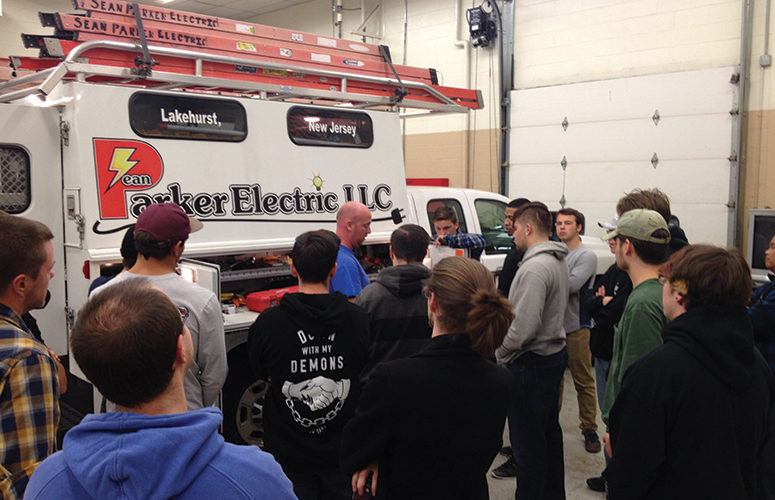

- Accounting
- Artificial Intelligence
- Banking / Financial
- Coronavirus
- Diversity
- Economic Development
- Economy
- Energy
- Environment
- General Business
- Government
- Healthcare
- High-Tech
- Higher Ed
- Infrastructure
- Labor
- Law
- Life Sciences
- Manufacturing
- Meeting Places
- Mergers & Acquisitions
- New Hire/Promotion
- Philanthropy
- Real Estate
- Science & Technology
- Small Business
- Tourism
- Transportation
- Workforce Development
- Special Sections
- Sponsored Content
