


Steve Adubato’s Lessons in Leadership: Keys to Executive Presence
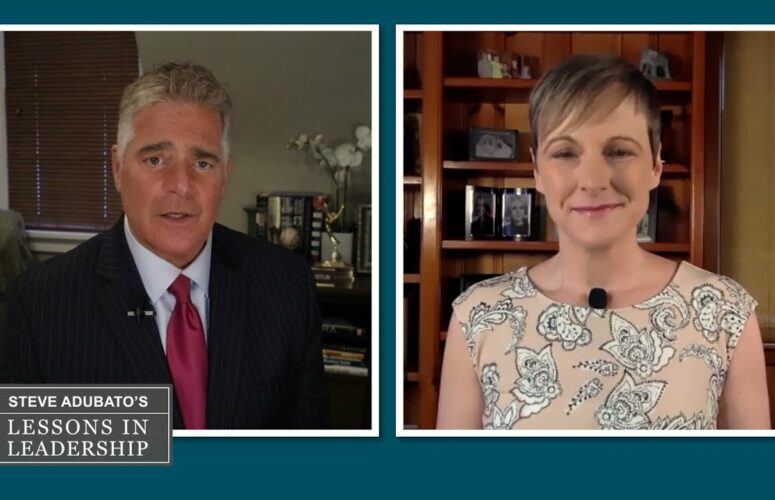
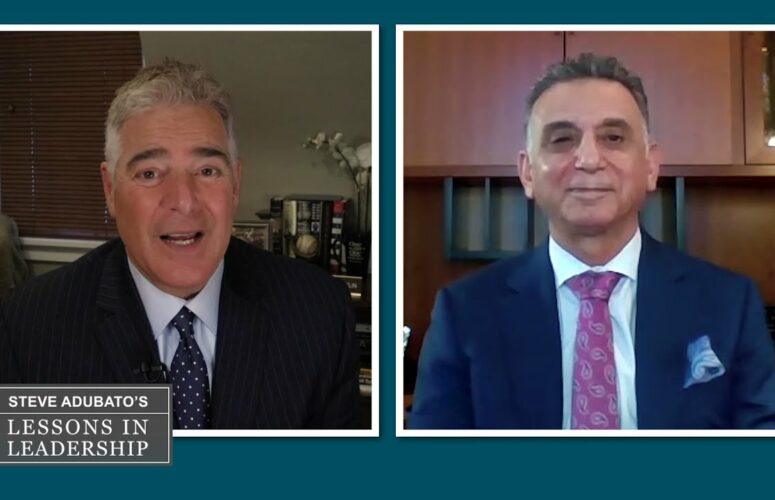
By Steve Adubato, Phd On Jun 17, 2025In this episode of Steve Adubato’s Lessons in Leadership, Steve Adubato and Mary Gamba are joined by William O. Cooper, MD, MPH, Cornelius Vanderbilt Professor of Pediatrics and Health Policy, Associate Dean for Faculty Affairs, Vanderbilt University School of Medicine, President, Vanderbilt Health Center for Patient and Professional Advocacy, to talk about the connection between leadership, passion, and professional success and happiness. Then, Steve and Mary talk with Dane Evans, CEO, Skoda Contracting Co., about creating an organizational culture that puts your team first as well as the importance of leadership development.
Executive presence is a funny thing. For many, it’s hard to define or someone tells you that you have it (or don’t), and you are not sure exactly what they are talking about.
But even if executive presence may be hard to define in a way that we can all agree, it’s like many things in life and in leadership, you know it when you see it. It has a lot to do with how you carry yourself. Do people notice you when you walk in the room? Not because you are loud or obnoxious, but rather because you carry yourself with a quiet confidence and a sense that you know that you have something to contribute.
But beyond having strong body language that includes good posture, direct eye contact, and having your body in sync with what you are saying, what are some other attributes and traits that will help improve your overall executive presence? Let’s consider a few:
- Use clear, concise, and unambiguous language. Avoid disclaimers or qualifiers that ultimately produce tentative communication. Phrases like, “It seems to me that we might be able to accomplish this goal if we possibly…” You get the idea. When someone communicates in this fashion, it equals poor executive presence. Instead, strong, clear language like, “What we need to do to accomplish our goals includes A, B and C.”
- Communicate with passion and energy. I’m not talking about being overly emotional or engaging in hyperbole. But rather, you must have vocal variety in your communication. This occurs when you tap into what you are feeling in connection with your message. This doesn’t mean just talking about what you are thinking but rather using your tone and demeanor to let the audience know what you believe in on a deeper, more visceral level. If you don’t believe in what you are saying, how do you expect anyone else to believe it?
- Lead with confidence. Like executive presence, confidence is one of those things that may be hard to define, but you know it when you see it, and you surely know it when you don’t. It involves a combination of behaviors and communication skills that project your knowledge in your subject matter. It is the ability to convey competence while inspiring trust and influence in others. This is not about appearing arrogant or cocky. Instead, it is about believing in yourself, your message, and knowing you have something to share that can be helpful to others.
- Be self-aware. Understand your emotions and how they impact your behavior. This also involves empathy and understanding and considering the perspective of others. When you think about being self-aware, not only do you need to look inward to explore your level of executive presence. That is one part of the equation. But what is just as important is looking outward and “reading the room” to analyze and interpret how you are being received and perceived by others. Executive presence involves taking an inventory of your own emotions but also the reactions of those around you.
- Look the part. Be intentional with what message your visual presence is sending. The first step is making sure your clothing is aligned with the venue in which you are communicating. If it is a more formal, corporate setting, dress accordingly. Or, if it is a business lunch at a casual spot, business casual may be the way to go. Further, ensure your hair is well groomed and your makeup, jewelry, or other accessories don’t get in the way or distract from the message you are looking to communicate.

- Accounting
- Artificial Intelligence
- Banking / Financial
- Coronavirus
- Diversity
- Economic Development
- Economy
- Energy
- Environment
- General Business
- Government
- Healthcare
- High-Tech
- Higher Ed
- Infrastructure
- Labor
- Law
- Life Sciences
- Manufacturing
- Meeting Places
- Mergers & Acquisitions
- New Hire/Promotion
- Philanthropy
- Real Estate
- Science & Technology
- Small Business
- Tourism
- Transportation
- Workforce Development
- Special Sections
- Sponsored Content
