

Trump Imposes 100% Tariffs on Pharmaceuticals, Adjusts Duties on Steel and Metals
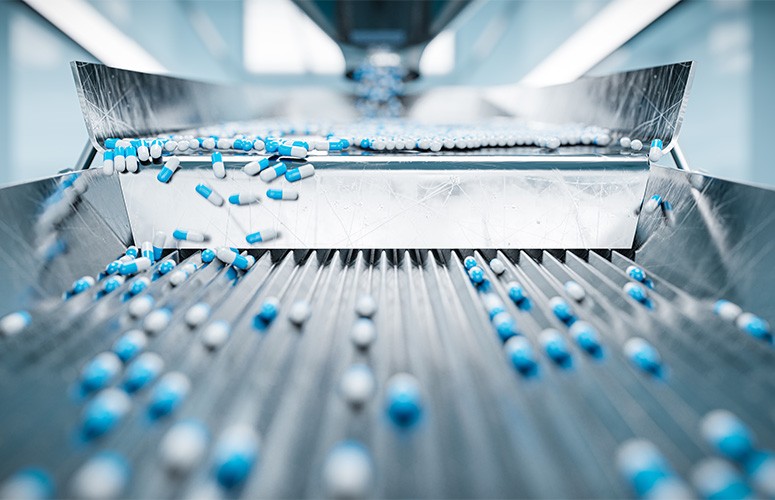
By Jim Pytell, Managing Editor On Apr 3, 2026President Donald Trump signed an executive order yesterday that could place up to 100% tariffs on some patented drugs and their ingredients if pharmaceutical companies fail to reach deals with the White House.
Companies that have signed a “most favored nation” pricing deal and are actively building facilities in the US to onshore production of patented pharmaceuticals and their ingredients will have a 0% tariff. For those that don’t have a pricing deal but are building such projects in the US, a 20% tariff will apply but will increase to 100% in four years.
The tariffs stem from a Section 232 investigation under the Trade Expansion Act, invoking national security grounds, with the administration citing that, “a self-sufficient domestic manufacturing and industrial base for pharmaceutical products is vital for the ability to support national defense requirements and public health.”
Essentially, companies neither holding agreements nor in active negotiations to onshore production face the full levy. Generic pharmaceuticals and their associated ingredients, including biosimilar products, plus orphan drugs, are not subject to the tariffs.
The administration said that large companies have 120 days before the 100% tariffs kick in, while mid- and small-sized companies have 180 days.
A number of major drugmakers have already struck deals to avoid the tariffs. Pfizer Inc., Eli Lilly and Co., AstraZeneca PLC, Novo Nordisk, and Johnson & Johnson secured three-year reprieves by agreeing to Most Favored Nation pricing. J&J also pledged a $55 billion U.S. investment, including two new manufacturing plants.
According to the administration, the impending Section 232 tariffs have already spurred approximately $400 billion in new investment commitments from US and foreign pharmaceutical companies.
Reacting to the Section 232 announcement, BioNJ President and CEO Debbie Hart said in a statement that, “BioNJ stands firmly in support of the fundamental mission of ensuring that the US remains the dominant source of biomedical innovation worldwide — with New Jersey being home to one of the central nuclei of that innovation.
“We are deeply concerned that the tariffs announced in the proclamations yesterday will ultimately generate obstacles that impede that competitiveness. These policies are uniquely damaging to the engines of biomedical innovation: small- and medium-sized biotechnology companies and ultimately will affect the entire system that produces the medicines that Patients need,” she said.
Chrissy Buteas, president and chief executive officer of the HealthCare Institute of New Jersey (HINJ), commented, “As the life sciences work to increase our domestic R&D and manufacturing capabilities, strengthening national security and American jobs while still researching and discovering cutting-edge medical advances, these tariffs become a barrier to those efforts. We remain committed to working with policymakers on solutions that lower barriers to innovation, accelerate the development of new treatments and cures, and reinforce the US’ and New Jersey’s global leadership in biopharma and medical technology innovation.”
Additional Adjustments to Steel, Aluminum and Copper Imports
Trump also signed a proclamation yesterday to strengthen tariffs imposed on imported steel, aluminum, and copper.
The proclamation defines the way that tariffs are assessed, now basing the levies on the full value of the metals paid by US customers rather than the amount it costs to produce them in a foreign country.
- The proclamation also establishes clear rules for calculating Section 232 metal tariffs.
- Articles made entirely or almost entirely of aluminum, steel, or copper will pay a flat 50% on their full value — for example, steel coils and aluminum sheet.
- Derivative articles substantially made of steel, aluminum, or copper will pay a flat 25% on their full value.
- Certain metal-intensive industrial equipment and electrical grid equipment will pay 15% through 2027, to accelerate the massive industrial base buildout currently underway across the United States.
- Products made abroad but entirely with American steel, aluminum, and copper will be subject to lower tariffs of 10%.
- Products made of 15% or less steel, aluminum, or copper will no longer be subject to Section 232 metals tariffs.
To access more business news, visit NJB News Now.
Related Articles:

- Accounting
- Artificial Intelligence
- Banking / Financial
- Coronavirus
- Diversity
- Economic Development
- Economy
- Energy
- Environment
- General Business
- Government
- Healthcare
- High-Tech
- Higher Ed
- Infrastructure
- Labor
- Law
- Life Sciences
- Manufacturing
- Meeting Places
- Mergers & Acquisitions
- New Hire/Promotion
- Philanthropy
- Real Estate
- Science & Technology
- Small Business
- Tourism
- Transportation
- Workforce Development
- Special Sections
- Sponsored Content
