

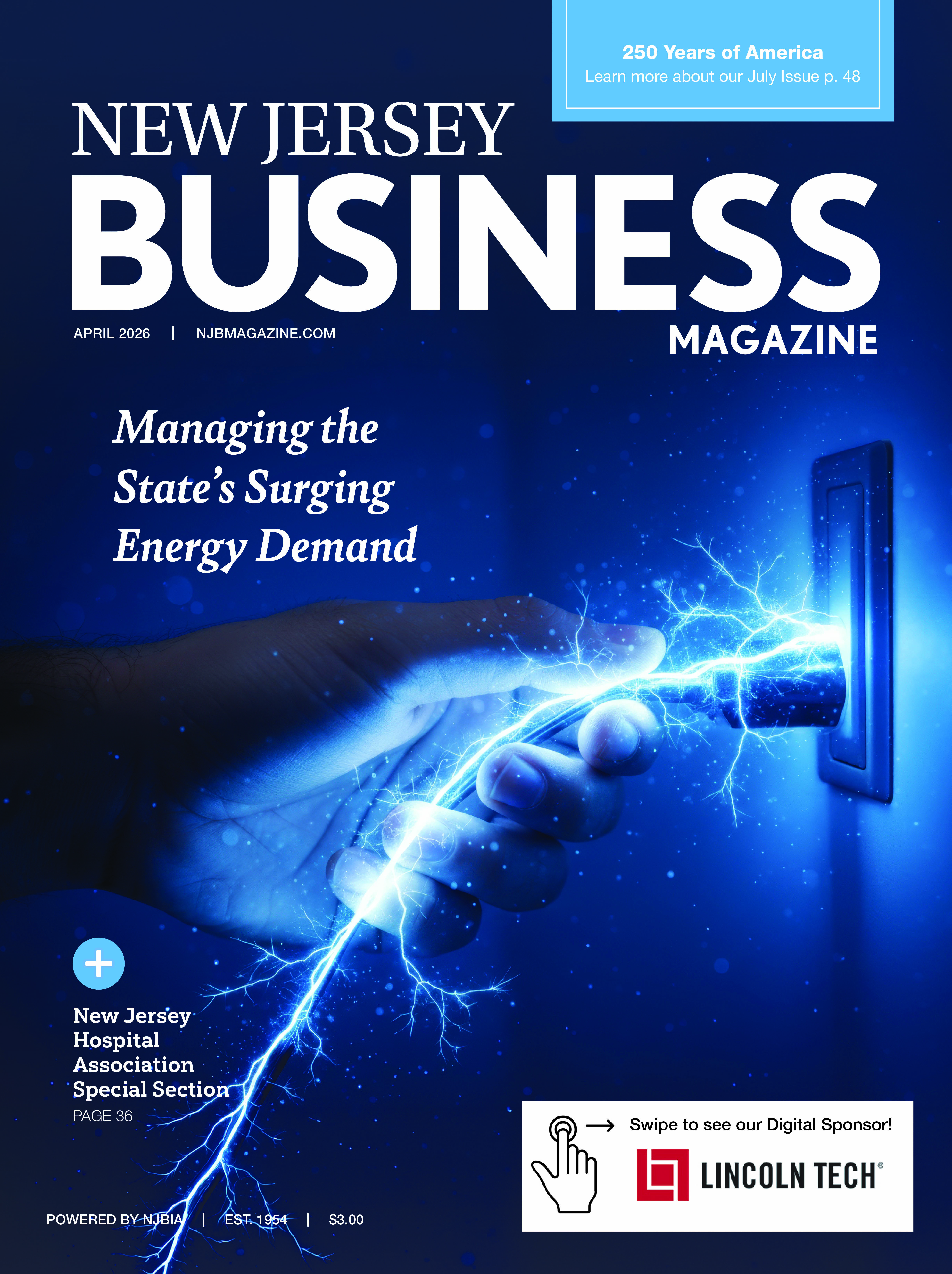

Government Must Make Energy Companies Confident About Investing in NJ
By Anthony Birritteri, Editor-in-Chief On Oct 28, 2025The demand for energy is increasing across the nation, especially across the PJM Interconnection power grid, which New Jersey is a part of. However, there are not enough generation and transmission projects being built in the region to meet the growing demand. At this morning’s Energy Usage and Reliability panel, held during the first day of the New Jersey Business & Industry Association’s Energy & Environmental Policy Forum, industry experts weighed in with solutions such as fixing government regulations so that power generators would feel more confident about investing in New Jersey.
Discussing the increase in energy demand over the next few years, Tim Burdis, director of state policy solutions, PJM Interconnection, said that in November 2022, PJM reported a 20% energy reserve market in the region. “That is a cushion over and above the amount of generation that we need and takes into account statistical anomalies, such as hurricanes and power outages,” he said. Just two months later in January 2023, PJM’s annual load forecast, for the first time since the Great Recession, saw an increased need of 4,000 to 5,000 gigawatts by 2030.
PJM is now projecting 32,000 gigawatts of additional demand over the entire system by 2030. “The 20% reserve margin that I was talking about is pretty much zero, but all is not lost,” Burdis said.
“We need to keep what we have, but we have to build more,” he continued, adding that PJM has 63,000 megawatts of signed contracts in place, “but they are languishing for one reason of another. … We must attract new megawatts. We have processes in place to help do that, but we haven’t quite done that entirely,” he said.
With the increase of data centers being built to support the increased use of artificial intelligence, Burdis pointed to the length of time it takes to build a data center – between 15 to 24 months – versus up to five years for a power plant. “We are not going solve [this data demand] problem immediately,” he said.
In support of increasing natural gas generation, Cynthia Niemeyer-Tieskoetter, policy advisor, domestic gas markets at the American Petroleum Institute (API), said the energy source is primed to be one of the main fuel sources to “meet the moment.”
“Over the last 10 years, the demand for natural gas has increased by 49%, but the natural gas infrastructure has only increased by 26%. The math doesn’t add up. We are running into a deficit of energy infrastructure, and permitting reform is going to be an important part of this conversation,” Niemeyer-Tieskoetter said.
She explained there is a three-legged stool when it comes to energy: it consists of affordability, liability, and sustainability. “New Jersey has gotten a little bit off the stool and is a bit lopsided. Our policies and regulations need to stay technology neutral. When you start influencing the markets in ways that the market doesn’t want to go, you see the impacts,” she said.
Matthew Schwall, director of regulatory affairs for independent power producer Alpha Generation, said that power generation and policy intersect in three areas: affordability, reliability, and environment.
More capacity is needed in the region, Schwall said, but price caps in place create a level of risk that Alpha needs to consider when deciding where to invest. “It is important to work with government from a policy and regulation perspective when deciding to [invest] half a billion dollars of new capital,” he said.
As a power producer in the wholesale market, Alpha Generation makes investments at its own risk, but it has been realizing a return on its investments because of market competition.
The two-day event is being held at the DoubleTree by Hilton Somerset Hotel and Conference Center. More Energy & Environmental Policy stories will appear in tomorrow’s NJBT.
To access more business news, visit NJB News Now.
Related Articles:


- Accounting
- Artificial Intelligence
- Banking / Financial
- Coronavirus
- Diversity
- Economic Development
- Economy
- Energy
- Environment
- General Business
- Government
- Healthcare
- High-Tech
- Higher Ed
- Infrastructure
- Labor
- Law
- Life Sciences
- Manufacturing
- Meeting Places
- Mergers & Acquisitions
- New Hire/Promotion
- Philanthropy
- Real Estate
- Science & Technology
- Small Business
- Tourism
- Transportation
- Workforce Development
- Special Sections
- Sponsored Content
