


Cleaning Land, Water & Air with New Technologies
Environmental engineering firms are finding no shortage of work thanks to industry innovations.
By Meg Fry, Contributing Writer On Jun 10, 2025Emerging contaminants – and the expertise, technologies, and regulations to properly address them – continue to dominate discussions amongst environmental engineers.
Per- and polyfluoroalkyl substances (PFAS), also known as “forever chemicals,” are particularly top of mind given the Environmental Protection Agency’s first publication of regulations for them in drinking water last year.
“The development of technologies focusing on treating PFAS in-situ, ex-situ, and in drinking water will shape future remediation projects,” says Fuad Dahan, PE, PhD, LSRP, principal for SESI Consulting Engineers, a multi-million-dollar, midsized environmental, geotechnical, and site civil engineering firm headquartered in Parsippany.
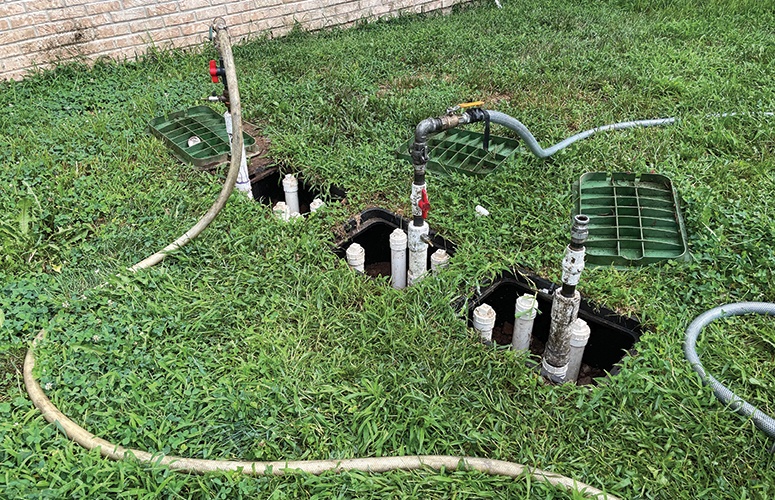
SESI has completed several PFAS projects in New Jersey involving ex-situ treatment of groundwater, meaning groundwater is pumped from the ground, treated with carbon, and injected back into the ground, with the contamination removed.
“This method requires a significant amount of energy use, whereas SESI has also completed a project in which PFAS were successfully treated in-situ, meaning the contaminated groundwater was treated in the ground [via] a greener solution,” Dahan says.
Mark Fisher, CHMM, LSRP, senior principal at Haley & Aldrich, Inc., says the firm’s team of more than 1,000 environmental, risk management, and geotechnical consultants nationwide is eager to continue utilizing the firm’s proprietary remediation technology known as EradiFluor™ to cost-effectively treat and transform PFAS into harmless fluoride molecules.
“EradiFluor has shown a defluorination rate of almost 100%, exceeding that of many other currently available technologies, which is important as other technologies typically concentrate PFAS, which then still require costly disposal,” Fisher says. “EradiFluor relies on ultraviolet light combined with other common treatment compounds to destroy PFAS.
“This process also uses considerably less energy than other technologies, providing a cost-effective [way to achieve] environmental sustainability goals.”
Haley & Aldrich, Inc., a large multi-million-dollar Massachusetts-based firm with offices in Parsippany and Princeton, has been retained to address more than 300 remediation projects and numerous Superfund Sites in New Jersey. It developed the EradiFluor technology with financial support from the Department of Defense’s Environmental Security Technology Certification Program and the Air Force Civil Engineering Center.
At a former railroad site in the state containing a plethora of major contaminants, including PFAS and low-level radioactive waste, John Oberer, senior vice president and principal of GZA GeoEnvironmental, Inc., says mastering the ability to build and rapidly update a state-of-the-art 3-D model of the site dramatically improved how quickly and accurately the firm was able to identify and address them.
“We can model the fate and transport of plumes, identify where we need to install additional monitoring wells, develop the best solution for protecting adjacent wetlands, and document where we can effectively use monitored natural attenuation rather than more disruptive and costly approaches to remediation,” Oberer says.
The nationwide, employee-owned firm headquartered in Massachusetts has offices in Fairfield, Hammonton, and Somerset, and works with clients including the New Jersey Department of Transportation, New Jersey Schools Development Authority, City of Newark and Bergen County Utilities Authority.
“Three-dimensional site modeling that is super-detailed and quickly updatable is one of the most important innovative technologies reshaping environmental remediation and consulting,” Oberer says. “Compared to even five years ago, the power and accuracy of today’s 3-D models are revolutionary for those who can develop the skills and experience to maximize their use.
“Of course, the downfall for remediation professionals will be if they accept everything at face value without looking behind the model, checking, calibrating, and validating the data. Human skills, experience, and insight into environmental remediation will become far more important, not less important,” he says.
Oberer adds that it is imperative that all employees learn to be masters of, and not servants to, artificial intelligence (AI).
“AI only makes hard-earned, experience-tested human intelligence more critically valuable for environmental remediation,” he adds.
Fisher says workforce development amidst such rapid innovation is a constant industry challenge.
“Many of the ‘seasoned’ environmental practitioners are now retiring, and this is only going to continue, considering that this industry became really active in the 1980s,” he adds. “The importance of STEM at all levels of the education system, as well as the development and mentoring of the aspiring professionals in the environmental industry in New Jersey, is paramount.”
Dahan adds even more industry challenge to that: “The tangential consequence of new regulations and emerging contaminants is properly scoping and budgeting projects to plan for the unknown,” he says.
“First, as technology evolves, so do the technical findings and the regulations that govern them. Second, the political environment affects the regulatory landscape, both in Trenton and in Washington, D.C. … Once regulations are issued, this involves reading and analyzing them, considering how they will be applied, attending training classes, and debriefing projects for lessons learned.
“It is essential that everyone involved in a project possesses the latest knowledge and understands how it affects every aspect of that project, from planning to investigative tasks, to report writing, to submission to the regulatory agency,” Dahan says.
The experts agree that hiring the right people to apply extensive knowledge and creative problem solving to increasingly challenging environmental projects is difficult enough, without adding the chaos of continuous regulatory change to the equation.
However, if armed with the latest technologies, targeted education, and a deep-rooted mission to serve, environmental engineers will find no shortage of work.
“Although New Jersey has one of the most complex and stringent regulatory programs in the nation, the end result is the improved protection of human health and the environment for all residents of the state,” Fisher says.
To access more business news, visit NJB News Now.
Related Articles:


- Accounting
- Artificial Intelligence
- Banking / Financial
- Coronavirus
- Diversity
- Economic Development
- Economy
- Energy
- Environment
- General Business
- Government
- Healthcare
- High-Tech
- Higher Ed
- Infrastructure
- Labor
- Law
- Life Sciences
- Manufacturing
- Meeting Places
- Mergers & Acquisitions
- New Hire/Promotion
- Philanthropy
- Real Estate
- Science & Technology
- Small Business
- Tourism
- Transportation
- Workforce Development
- Special Sections
- Sponsored Content
