


Supreme Court Rules Against Many of Trump’s Global Tariffs
By Jim Pytell, Managing Editor On Feb 20, 2026This morning the Supreme Court ruled in a 6-3 decision to strike down many of President Donald Trump’s tariffs – more specifically those issued under the authority of the International Emergency Economic Powers Act (IEEPA) – in what is a major blow to the president’s economic plan.
While the court’s decision does not affect all of Trump’s tariffs, leaving in place ones he imposed on steel and aluminum using different statutes, for example, it invalidates those issued under the 1977 IEEPA statute including the reciprocal “Liberation Day” tariffs imposed on most countries in the world, as well as the 25% tariff imposed on some goods from Canada, China and Mexico for what the administration cited as “failure to curb the flow of fentanyl.”
Trump called the decision “deeply disappointing,” and said that he is “ashamed of certain members of the court for not having the courage to do what’s right for our country.”
The tariffs were challenged in federal court by various importers, including Illinois-based educational toy company Learning Resources, which argued that IEEPA did not grant the president power to authorize tariffs.
Chief Justice John Roberts, along with Justices Amy Coney Barrett and Neil Gorsuch joined the court’s three liberal judges in the majority, said that Trump’s citation of the 1977 law to justify the import duties “falls short” of the congressional approval that would be needed to execute such actions.
“The President asserts the extraordinary power to unilaterally impose tariffs of unlimited amount, duration, and scope,” Roberts wrote. “In light of the breadth, history, and constitutional context of that asserted authority, he must identify clear congressional authorization to exercise it.”
Although IEEPA allows the president to “regulate” importation during national emergencies tied to foreign threats, it does not specifically authorize tariffs or duties. The majority rejected the argument that “regulate” implicitly includes taxation powers.
The court did not weigh in, however, on whether or how the federal government should provide refunds to the importers who have paid the tariffs, estimated in 2025 at more than $200 billion.
According to federal data, the federal government has been collecting about $30 billion in tariffs every month.
“Since President Trump instituted tariffs last year, there has always been an understanding that while some New Jersey manufacturers might benefit in the long-term, there would indeed be short-term pain in the form of increased costs for business,” NJBIA President and CEO Michele Siekerka said in a statement. “Today’s ruling could potentially alleviate some of those cost pressures for those impacted. We hope that this pause can bring about more conversation and collaboration between industry and lawmakers to strengthen our national economy, but without putting our employers in peril.”
During a press conference today in response to the court’s decision, Trump said he planned to sign a new 10% global tariff under Section 122 of the Trade Act of 1974, adding that the tariff would be “over and above” normal tariffs already being charged. Trump also said any new tariffs imposed could “potentially be higher than they were.”
According to the Tax Foundation, tariffs imposed under Section 122 of the Trade Act of 1974 cannot exceed 15% and are authorized for a maximum of 150 days, unless authorized by Congress.
One of the stated goals by the Trump administration for the global tariffs imposed under IEEPA was to create leverage for America’s trade strategy.
Many countries had entered trade agreements with the US after the tariffs were implemented — and before the ruling indicated that they would continue to honor those agreements, though that remains to be seen.
Justice Brett Kavanaugh wrote the main dissent, which was joined by Justices Clarence Thomas and Samuel Alito. He suggested, although “I firmly disagree with the Court’s holding today, the decision might not substantially constrain a President’s ability to order tariffs going forward … because numerous other federal statutes authorize the President to impose tariffs and might justify most (if not all) of the tariffs at issue in this case.”
Gov. Mikie Sherrill applauded the Supreme Court’s decision, saying that Trump’s tariffs “hurt working people” and that she is “focused on fighting for working families to bring down costs and make New Jersey more affordable.”
To access more business news, visit NJB News Now.
Related Articles: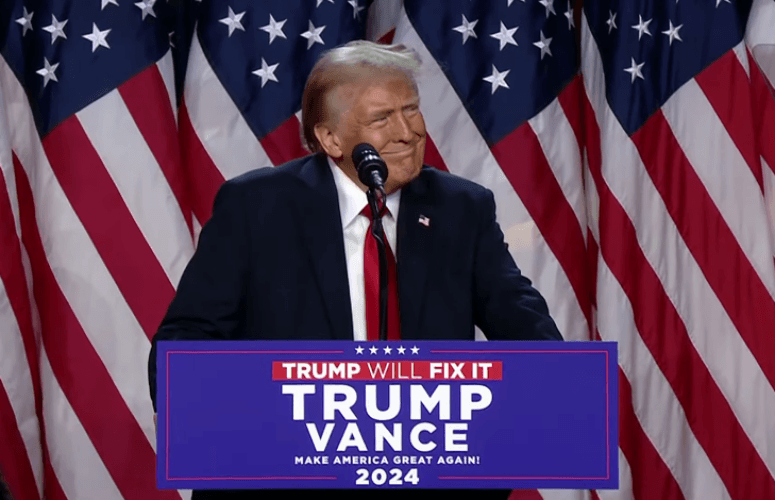


- Accounting
- Artificial Intelligence
- Banking / Financial
- Coronavirus
- Diversity
- Economic Development
- Economy
- Energy
- Environment
- General Business
- Government
- Healthcare
- High-Tech
- Higher Ed
- Infrastructure
- Labor
- Law
- Life Sciences
- Manufacturing
- Meeting Places
- Mergers & Acquisitions
- New Hire/Promotion
- Philanthropy
- Real Estate
- Science & Technology
- Small Business
- Tourism
- Transportation
- Workforce Development
- Special Sections
- Sponsored Content
