NJ Commercial Real Estate Outlook
From repositioning stranded assets to being positive about a new governor, commercial real estate experts are bullish about 2026.
By Anthony Birritteri, Editor-in-Chief On Mar 12, 2026In this installment of New Jersey Business Magazine’s continuing Business Roundtable Series, conducted in conjunction with the New Jersey Business & Industry Association, we discuss trending topics concerning New Jersey’s commercial real estate landscape with a panel of industry experts.
Meet Our 5 Panelists
Dominic M. Fittizzi
Vice President, NAI James E. Hanson
With more than 40 years’ experience in real estate, Fittizzi is responsible for all aspects of commercial real estate sales at NAI James E. Hanson, including identifying market opportunities, developing client relationships, negotiating lease terms, and executing sale/lease contracts with commercial clients ranging from small business owners to large corporations.
David Greek
Managing Partner, Greek Real Estate Partners
Greek directs the industrial real estate development firm’s strategic vision, spearheading business ventures and overseeing project acquisitions, taking charge of site selection, valuation modeling, financing, transaction negotiations, and deal packaging for clients. He is also the chair of Circulate NJ, reflecting his ongoing commitment to economic growth, professional development, and environmental rehabilitation.
Dan Kennedy
CEO, NJ Chapter of NAIOP
Kennedy heads the leading organization responsible for advancing the interests of commercial real estate owners, developers, and related professionals in New Jersey. His subject matter expertise includes a wide range of environmental, development and utility issues. He is a licensed professional planner with an MCRP from Rutgers’ Edward J. Bloustein School of Planning & Public Policy and a B.S. in Environmental Science from the University of Delaware.
William Kimmerle
Partner, Kimmerle Group & Kimmerle Newman Architects
Kimmerle has been a leader at KG for more than 15 years and directs its industrial and healthcare practices. His experience includes close administration of technical requirements for the aerospace, flavors and fragrances, electronics, and plastics manufacturing industries, in both tenant and owner-occupier transactions. His expertise ranges from early transaction advisory through to construction closeout.
Ohad Porat
Chief Investments Officer, Faropoint
Porat leads Faropoint’s investment activities across multiple markets. His responsibilities include acquisitions, dispositions, leasing, property management, and go-to-market strategy development. He has overseen the acquisition of more than 550 buildings and the disposition of approximately 200 properties, while also negotiating over 300 leases.
What is the status of the office market today?
Kennedy: It depends where you are: suburban or downtown. When I say downtown, I don’t mean big urban centers. Downtowns could mean any trend-setting place with significant density.
It also depends on building class. We’re seeing strength in the Class A downtown market, and continued weakness in the suburban markets. Many of the assets that are not being repositioned are being knocked down for industrial development. You’re seeing that all over the state, but mostly in Central and Northern New Jersey.
Fittizzi: There’s a big bifurcation between Class A, B, and C space. The well-positioned assets that are amenity-rich and closer to public transportation are doing much better. The Class C office assets aren’t going to exist in another two or three years. At some point in the next 24 months, we’ll only have A and B assets as far as the office sector goes.
Kimmerle: Class C properties that were being repositioned to try to capture potential office tenants; that’s all settled down and quiet. That said, it’s just impossible to get space in Class A properties. There’s almost a waiting list at this point.
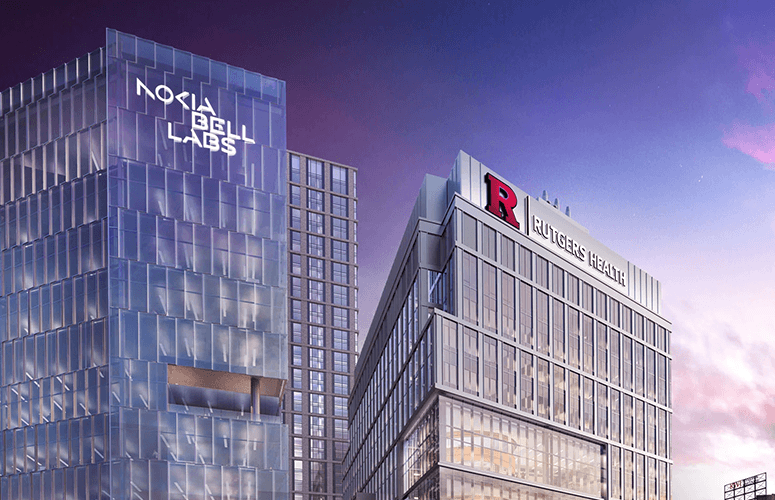
Kennedy: The South Jersey office market is the weakest. In Central Jersey, you’re going to see inventory coming online. Maybe it’s Class A with what’s being built in New Brunswick at the HELIX.
How do NJ’s office and industrial markets compare to NY and Philly’s in terms of competitiveness?
Fittizzi: We are going to see an influx into the New Jersey office and industrial markets, given the current political situation in New York City. The city is going to enforce policies that will not be business friendly, and we will benefit from that.
New Jersey has not been the most business friendly either in the last decade or so. We have had a lot of people leave on the industrial side and head to Pennsylvania where it seems very accommodating and welcoming to businesses.
Do you have advice for the new Sherrill administration in taking advantage of what might be flowing out of NYC?
Kennedy: One of the things that is going to hold up innovation in office market conversions [are the amendments to the] Mansion Tax that Gov. Murphy and the Legislature applied. It is a punitive tax on redevelopment because office assets are captured as an asset class under that tax.
It has blown up several office deals in New Jersey. We hope that Gov. Sherrill and the Legislature will reconsider that punitive decision and remove office assets from that calculation or, at the very least, moderate that tax on real estate transactions.
Greek: I don’t think our new governor needs to enact any new policies to attract any users from New York.
There has been an ongoing outflux of industrial tenants from the five boroughs into Northern Jersey for the past 30 to 40 years. We expect that flow to continue as space gets tighter within the boroughs, and tenants look for upgraded facilities that aren’t available in Manhattan.
The trend has been going in the same direction from New Jersey into Pennsylvania over that same period for industrial use. Most of that has to do with operating costs and taxes. New Jersey is the most expensive state in which to live and operate.
Gov. Sherrill ran on a platform of affordability, and we agree with her that this is the most important issue in the state. She’s got the right ideas, and we’re hopeful that she can implement them effectively.
Data centers are an opportunity that our new governor needs to pay attention to. The population density, as well as the density of financial services firms [in NYC], will require continued data center development, both in the city and across the river here, but we need to make it more affordable to build data centers here.
Porat: The bigger risk for the long-term are other states. We had a major discussion with a food manufacturer serving the entire East Coast.
[Regarding New Jersey,] they did the math on how much they would pay in taxes, how much they would pay workers, and housing as well. The math said go to a different [location] on the East Coast. We don’t hear that every day, but we hear it enough to say it is happening.
Kimmerle: On a global level, there are foreign companies that have been looking to open manufacturing facilities here because being close to New York is attractive to them.
But when talking about electricity, trying to get 8,000 amps to a property in New Jersey is an incredibly long process compared to some European countries. The construction costs here make their eyes pop out.
What is the overall status of New Jersey’s industrial market today?
Porat: The past two years have been tough on industrial absorption. It has been true across the board, from New Jersey all the way to Los Angeles, and going down to Texas and Florida. However, in the past six months, we’ve seen some stabilization. It was a lot better in Q4 2025 and, hopefully, will be better in this quarter as well. Northern New Jersey is our best performing market. It’s a different environment in South Jersey. It is a soft market for the 25,000-square-foot user base.
What is being done to bring stranded office properties back to life? What are the feasible solutions?
Greek: The best replacement from a pure tax revenue perspective is an industrial or a data center. They share much of the same characteristics as an office property in terms of not adding children to the school system, but adding local jobs. The only downside to industrial vs office is that the former comes with trucks. So, an industrial developer must convince everyone their project is good for the town. It’s not a difficult discussion to have with most mayors as they see holes in their tax revenues created by vacant office spaces.
Kimmerle: We must break apart the types of industrial because there is industrial manufacturing and industrial warehousing.
We have been involved in a lot of Class C and, in some cases, Class A office conversions to light manufacturing. It is extremely attractive to towns. It’s clean use with low volume trucking, no increase to the school obligation, and comes with significant job increases, similar in density to what existed with office space.
What state policies have been helping the commercial real estate market?
Fittizzi: On both the developer and owner side, the Payment in Lieu of Taxes (PILOT) program has been stupendous. Without it, we wouldn’t have seen 50% of the development that we have seen in the last five to six years. Additionally, the NJEDA’s Aspire program is going to become very prominent.
Kennedy: The Film & Digital Media Tax Credit Program has worked. It has positive benefits for the [entire] real estate industry, not just for construction and ownership, but also for lawyers, engineers, architects, infrastructure and site prep folks … it’s spiraled.
You have 1888 Studios, Lionsgate and Netflix studios that would not be built if not for Gov. Murphy and his team’s Film & Digital Media Tax Credit Program.
What is your outlook for commercial real estate in 2026?
Kennedy: Optimistic. We have a new governor who is saying a lot of the right things. We have had experiences with Governor Sherrill and her team. She gave us opportunities to educate her on issues specifically around warehousing. She showed up, listened, and she seemed to have adapted a bit to the realities that we see.
Fittizzi: I’ve been through many real estate cycles and wars. I’m very bullish on the market right now. We have strong fundamentals. In the short and long-term, I see the Tri-State area and the nation moving forward and doing well.
Kimmerle: I’m optimistic. We are having conversations about sectors that we wouldn’t have talked about 10 years ago and focusing on different areas of growth in the state.
Porat: The cycle is hopefully at a point where we’re going to see growth from now on. It’s national and true for New Jersey.
Greek: Drilling past some of the doomsaying in the media, I think the fundamentals are building to a place where it is a foregone conclusion that this is going to be a good year. It really should get us back on our feet. While some people said the end of 2025 was going to be the start of a recovery, I think by the end of 2026 we will have fully recovered.
To access more business news, visit NJB News Now.
Related Articles:
- Accounting
- Artificial Intelligence
- Banking / Financial
- Coronavirus
- Diversity
- Economic Development
- Economy
- Energy
- Environment
- General Business
- Government
- Healthcare
- High-Tech
- Higher Ed
- Infrastructure
- Labor
- Law
- Life Sciences
- Manufacturing
- Meeting Places
- Mergers & Acquisitions
- New Hire/Promotion
- Philanthropy
- Real Estate
- Science & Technology
- Small Business
- Tourism
- Transportation
- Workforce Development
- Special Sections
- Sponsored Content
