

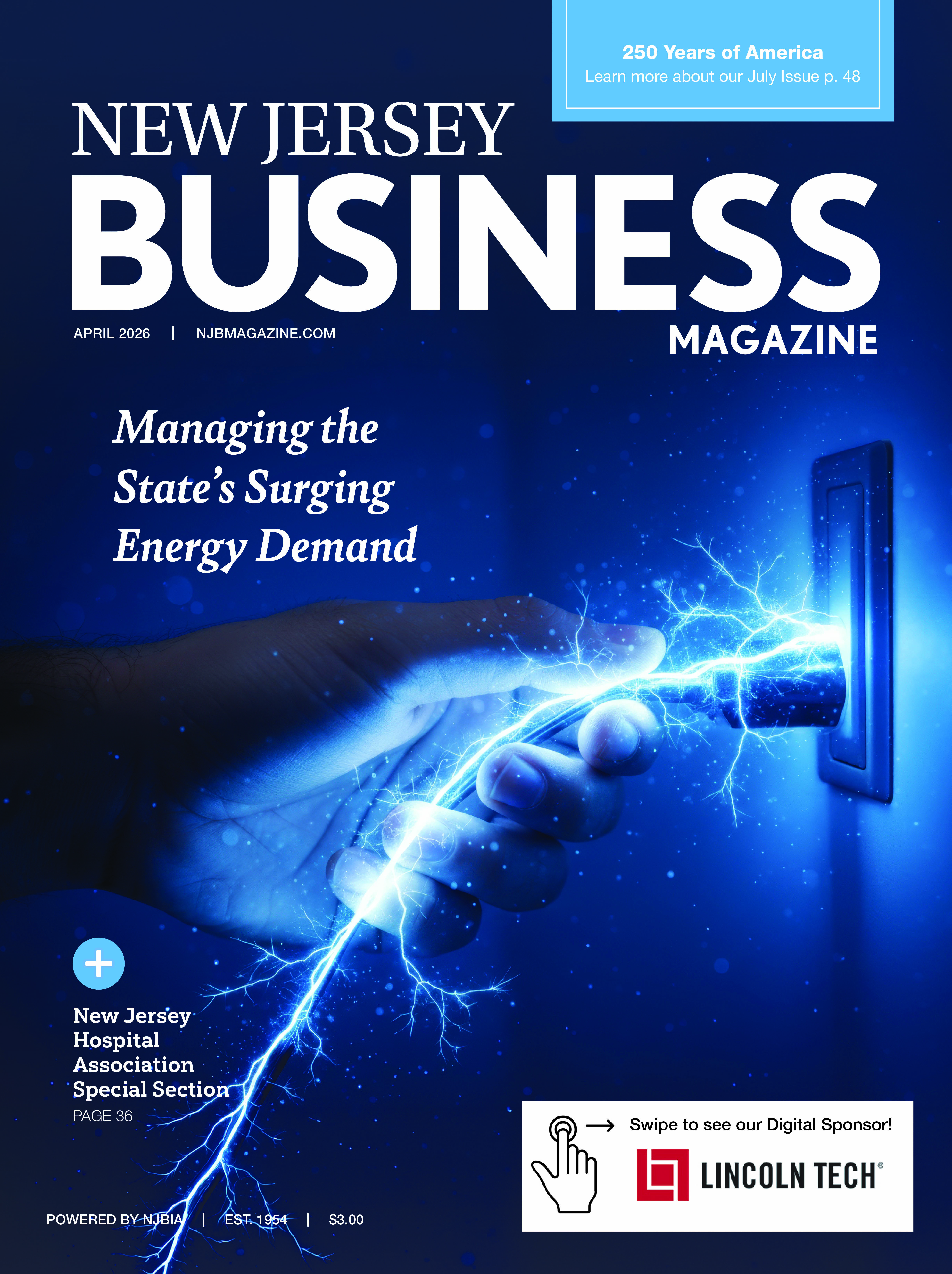
Energy Gaps Can Short-Circuit AI’s Future
Focus NJ
By Jack Ramirez, Focus NJ Research Analyst On Feb 2, 2026Artificial Intelligence. We engage with it knowingly or unknowingly every day, whether it is in our smartphones, cars, and even some toothbrushes.
Time Magazine named the Architects of AI as the Time Person of the Year for 2025, and in 2026 AI continues to dominate conversations across industries and in capitols. While most debate focuses on unlocking AI’s full potential, there are also industry experts and data center developers warning of the higher energy needs to fuel these advancements.
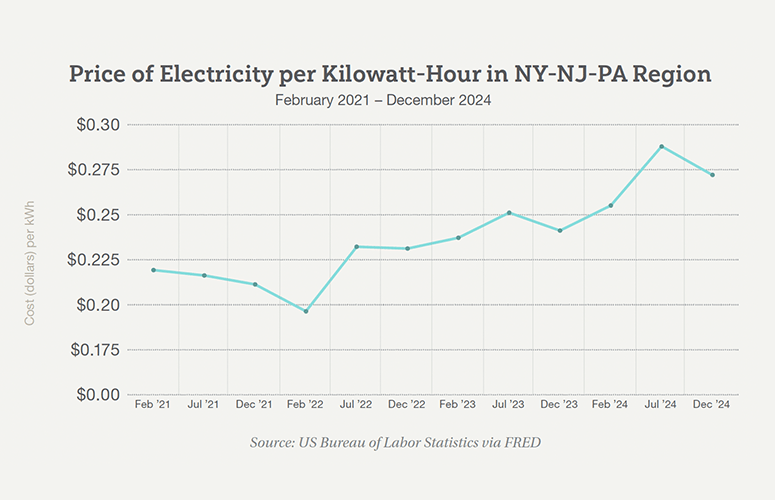
Narrowing the national lens to New Jersey, we see this concern exacerbated by policy changes in recent years that have transformed this state into an energy importer. Under former Gov. Phil Murphy, six power plants across New Jersey closed operations, resulting in less net energy production and 27% higher residential bills compared to other states.
Currently, New Jersey is home to more than 80 data centers – the brains behind AI – where much of the data from the tri-state area is processed and stored. However, New Jersey’s high energy costs and status as a net-energy importer now give pause to data center developers looking to make further investments here.
There is a broader economic impact to consider. Data centers support more than the future development of AI; they also help drive the state’s economy. In 2023, the industry contributed $17.31 billion toward total state GDP. For every job created inside the industry, six more are supported across the economy, underscoring the cross-industry impact.
However, AI’s expansion is energy-intensive and relies on data centers that require constant large-scale electricity loads. As of 2023, US data centers accounted for 4.4% of domestic energy usage with some estimates projecting that to double or triple by 2028.
If New Jersey fails to modernize or incentivize electricity generation to expand its power-generating capacity, it risks losing future data center investment and rapid AI advancements. Gov. Mikie Sherrill and members of the 222nd Legislature, who all took office a few weeks ago, must now chart a course for state energy policy, and their decisions will determine whether New Jersey is able to reclaim its position as the Innovation State.
To access more business news, visit NJB News Now.
Related Articles:

- Accounting
- Artificial Intelligence
- Banking / Financial
- Coronavirus
- Diversity
- Economic Development
- Economy
- Energy
- Environment
- General Business
- Government
- Healthcare
- High-Tech
- Higher Ed
- Infrastructure
- Labor
- Law
- Life Sciences
- Manufacturing
- Meeting Places
- Mergers & Acquisitions
- New Hire/Promotion
- Philanthropy
- Real Estate
- Science & Technology
- Small Business
- Tourism
- Transportation
- Workforce Development
- Special Sections
- Sponsored Content
